

Colorectal cancer (CRC) screening represents one of the largest public health investments in gastroenterology. Yet, the three landmark randomized trials published over the past few years—NordICC, SCREESCO, and COLONPREV—have delivered a seemingly paradoxical message. Despite enrolling hundreds of thousands of participants, none has convincingly demonstrated a reduction in colorectal cancer mortality in intention-to-screen analyses.
Does this mean population-based CRC screening has failed?
Probably not.
These trials primarily challenge the population-level effectiveness of screening programmes rather than the individual benefit of screening itself. Their outcomes are heavily influenced by participation rates. In NordICC, only 42% of individuals invited to undergo colonoscopy actually attended screening. Among those who did (per-protocol analysis), colorectal cancer incidence was reduced by 45%. Likewise, SCREESCO demonstrated an increased detection of early-stage (stage I-II) cancers, while COLONPREV showed that FIT-based screening was non-inferior to colonoscopy for CRC mortality at 10 years, with significantly higher participation rates.
These studies also highlight an important methodological lesson. In every randomized controlled trial, the primary endpoint determines the sample size, statistical power, and ultimately how the results are interpreted. Disease-specific mortality has traditionally been regarded as the gold standard. But is it still the most appropriate endpoint in a disease whose prognosis continues to improve thanks to advances in endoscopy, surgery, systemic therapy, and perioperative care?
Today, more than 90% of patients diagnosed with stage I or II colorectal cancer are cured. Yet none of these landmark trials adequately evaluated outcomes that matter deeply to patients: quality of life, avoidance of chemotherapy, stoma formation, functional outcomes, or healthcare costs. Diagnosing a T1 lesion amenable to curative endoscopic resection is clearly not equivalent to diagnosing metastatic disease requiring lifelong systemic treatment—even if both patients are alive five years later.
Perhaps the greatest challenge highlighted by these studies is not improving the screening test itself, but increasing participation. Even the most effective screening strategy will have little impact if a substantial proportion of the eligible population does not participate. This concept aligns remarkably well with the recent evolution of post-polypectomy surveillance guidelines, which advocate fewer colonoscopies—but for more people. By reducing low-yield surveillance procedures, endoscopy resources can be redirected toward what truly matters: expanding screening coverage, increasing participation, and ensuring that colonoscopy is offered to those most likely to benefit.
Rather than questioning colorectal cancer screening itself, these trials challenge the way we define success. The next generation of screening studies should aim not only to demonstrate that screening saves lives, but also that it preserves quality of life, reduces treatment burden, and optimizes the use of increasingly limited healthcare resources.
FROM THE ENDOGASTROLIVE MEDIA LIBRARY
Screening colonoscopy technique
(Please note that some of the following videos are currently available in French only)
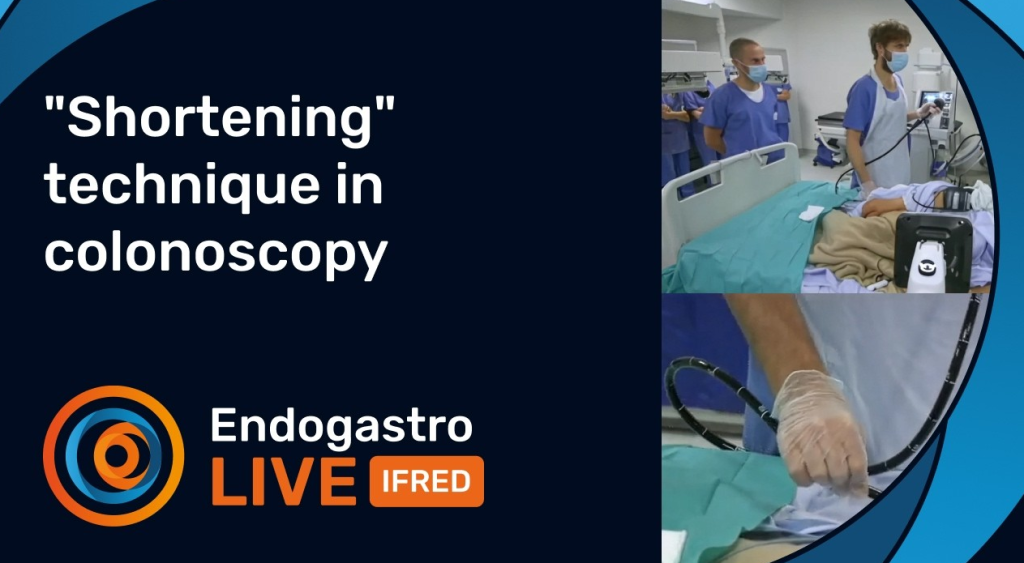
“Shortening” technique in colonoscopy
Watch the video ›

Colonoscopy withdrawal and cold snare polypectomy
Watch the video ›
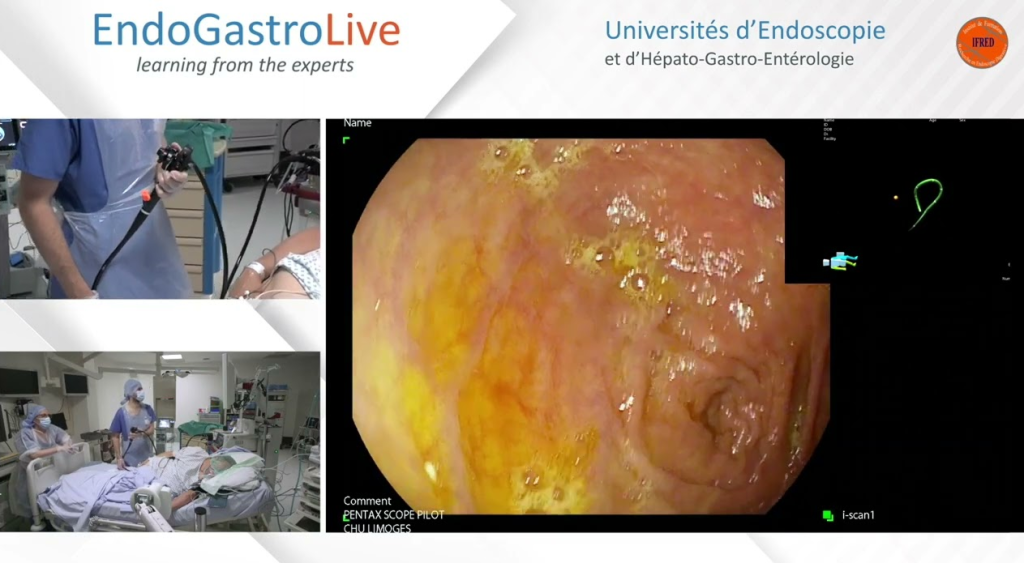
Colonoscopy technique and AI for colorectal cancer screening
Watch the video ›
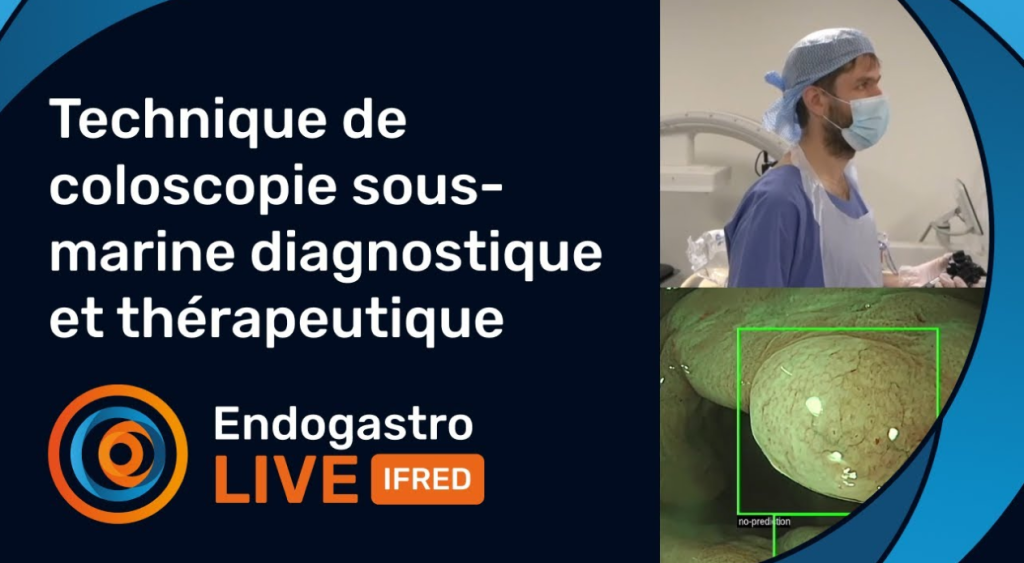
Diagnostic and therapeutic underwater colonoscopy technique
Watch the video ›
References
- Once-only colonoscopy or two rounds of faecal immunochemical testing 2 years apart for colorectal cancer screening (SCREESCO): preliminary report of a randomised controlled trial
Forsberg A, Westerberg M, Metcalfe C, Steele R, Blom J, Engstrand L, et al. The Lancet Gastroenterology & Hepatology. 2022 Jun;7(6):513-521. doi: 10.1016/S2468-1253(21)00473-8. - Effect of Colonoscopy Screening on Risks of Colorectal Cancer and Related Death
Bretthauer M, Løberg M, Wieszczy P, Kalager M, Emilsson L, Garborg K, et al. The New England Journal of Medicine. 2022 Oct 27;387(17):1547-1556. doi: 10.1056/NEJMoa2208375. - Effect of invitation to colonoscopy versus faecal immunochemical test screening on colorectal cancer mortality (COLONPREV): a pragmatic, randomised, controlled, non-inferiority trial
Castells A, Quintero E, Bujanda L, Cubiella J, Salas D, Lanas A, et al. The Lancet. 2025 Apr 12;405(10486):1231-1239. doi: 10.1016/S0140-6736(25)00145-X. - Systematic Review of Participation, Positivity, and Yield Over Time in Fecal Immunochemical Test-Based Organized Colorectal Cancer Screening Programs
Baile-Maxía S, Pimienta M, Sánchez-Ardila C, Castells A, Jover R, Ladabaum U. Clinical Gastroenterology and Hepatology. 2026 Feb;24(2):215-228. doi: 10.1016/j.cgh.2026.02.009. - Cancer treatment and survivorship statistics, 2025
Wagle NS, Nogueira L, Devasia TP, Yabroff KR, Islami F, Jamal A, et al. CA: A Cancer Journal for Clinicians. 2025 Jul-Aug;75(4):308-340. doi: 10.3322/caac.70011.
EndoGastroLive – The Scientific Newsletters
Endoscopy is both an art and a science. Beyond mastering techniques and procedures, practice relies on evidence that keeps evolving — and that deserves more than a quick read of an abstract.
The EndoGastroLive Scientific Newsletters offer short, punchy, critical analyses of the publications that matter in endoscopy and gastroenterology: not just the results, but their significance, their limitations, and whether — or not — they should change what we do tomorrow.
The science behind the scope.