

For years, our approach has been straightforward: the higher the risk, the closer the surveillance. EPoS II may well challenge this paradigm.
In this exceptional European randomized non-inferiority trial published in the New England Journal of Medicine, 10,799 patients with completely resected high-risk adenomas were randomized to undergo their first surveillance colonoscopy at either 3 years, as currently recommended, or 5 years.
After 5.5 years, the cumulative incidence of colorectal cancer was 0.77% with 5-year surveillance versus 0.82% with 3-year surveillance. The risk difference was –0.05 percentage points, with an upper boundary of the one-sided 99.12% confidence interval of 0.68%, meeting the prespecified non-inferiority margin of 0.7%. Importantly, the stage distribution of diagnosed cancers was also similar between groups.
Even more strikingly, more than 99% of these patients — despite being classified as “high risk” — did not develop colorectal cancer within 5 years after adenoma removal. This remarkably low absolute risk led the authors themselves to question whether the “high-risk” label remains appropriate in the era of modern, high-quality colonoscopy. A risk factor does not necessarily justify intensive surveillance when the absolute risk of the event remains very low.
And this is where the potential impact of EPoS II becomes enormous: extending the surveillance interval resulted in 48.5% fewer colonoscopies.
Almost half as many colonoscopies, with no observed increase in colorectal cancer incidence and no substantial difference in cancer stage at diagnosis
Some caution is required. This is an interim analysis of a trial whose primary endpoint is colorectal cancer incidence at 10 years, and the non-inferiority threshold was only narrowly met. However, after the 5-year colonoscopy, both groups will now follow the same surveillance schedule, with the next colonoscopy planned at 10 years. Although the final analysis remains essential, it therefore seems unlikely that this later period, during which surveillance is identical, will fundamentally reverse the signal observed so far.
The potential implications are considerable. At a time when healthcare systems worldwide are facing limited resources, restricted access to endoscopy, and increasing financial pressure, avoiding thousands of low-yield colonoscopies could release substantial endoscopy capacity. The environmental impact, although not assessed in this study, could also be considerable: perhaps the most effective way to reduce the environmental footprint of endoscopy is simply not to perform procedures with marginal benefit.
One point, however, is crucial: these results were obtained after a high-quality index colonoscopy, with adequate bowel preparation, complete cecal intubation, and complete removal of all identified lesions.
Doing less afterwards is acceptable only if we do it right the first time.
One important question remains: can these findings be extrapolated to very large benign lesions completely resected by endoscopic submucosal dissection? This remains to be demonstrated. If confirmed, it would provide another argument in favor of complete en bloc resection, as opposed to piecemeal EMR and the closer surveillance it may require.
Ultimately, the message goes far beyond post-polypectomy surveillance: fewer repeat colonoscopies for the same patient, but more patients gaining access to colorectal cancer screening.
Less, but better. And above all, using our limited endoscopy resources where they can truly help prevent colorectal cancer.
FROM THE ENDOGASTROLIVE MEDIA LIBRARY
Cases of optimized EMR
(Please note that some of the following videos are currently available in French only)
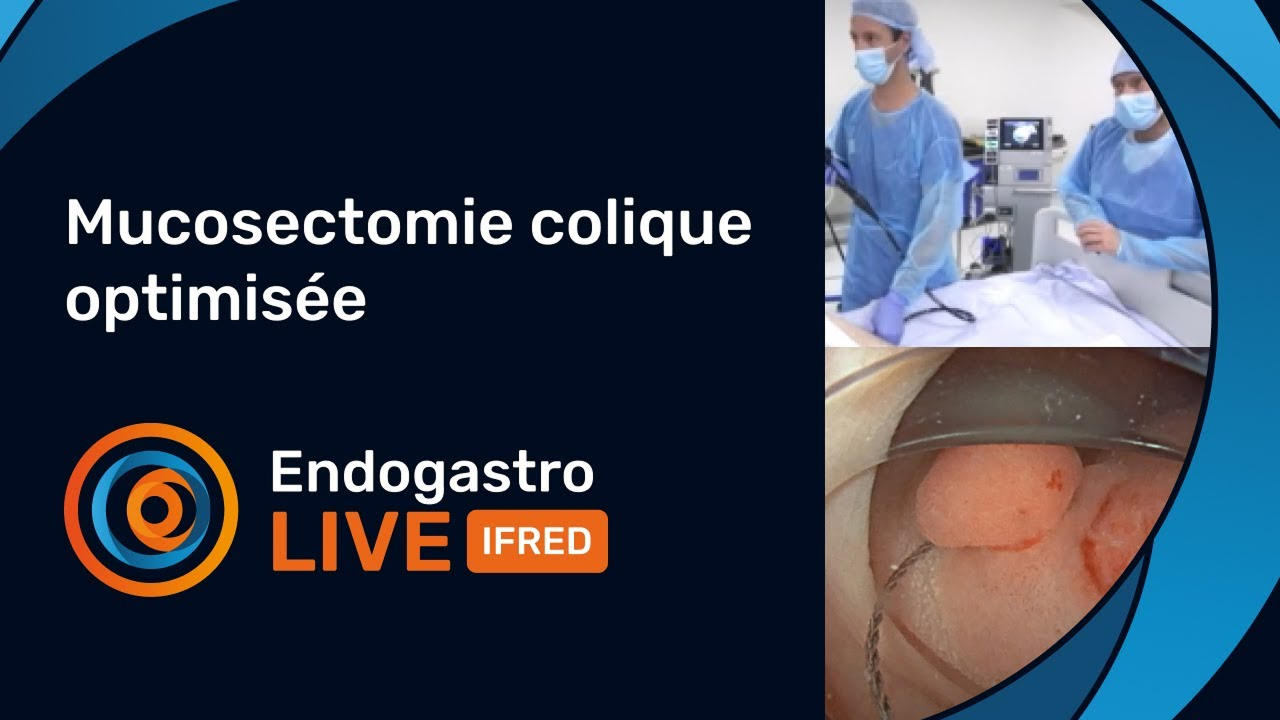
Optimized colonic EMR
Watch the video ›
Colonic EMR
Watch the video ›
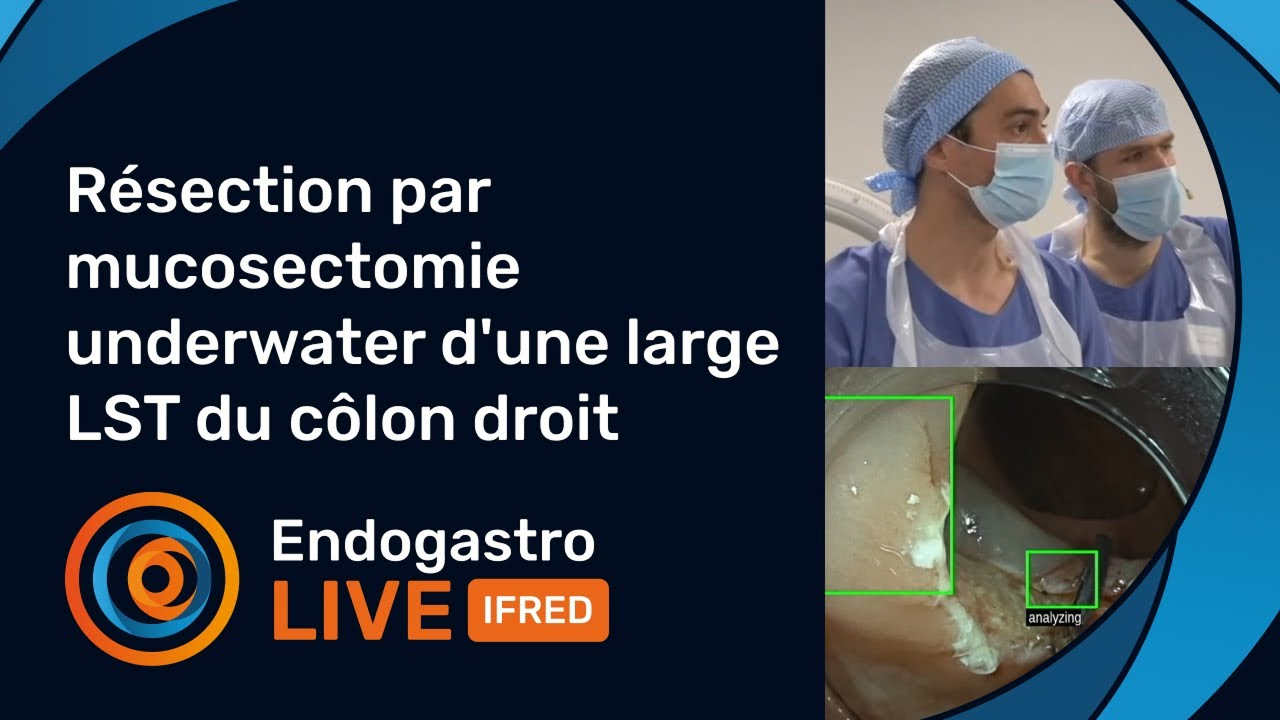
Underwater EMR of a large right-colon LST
Watch the video ›
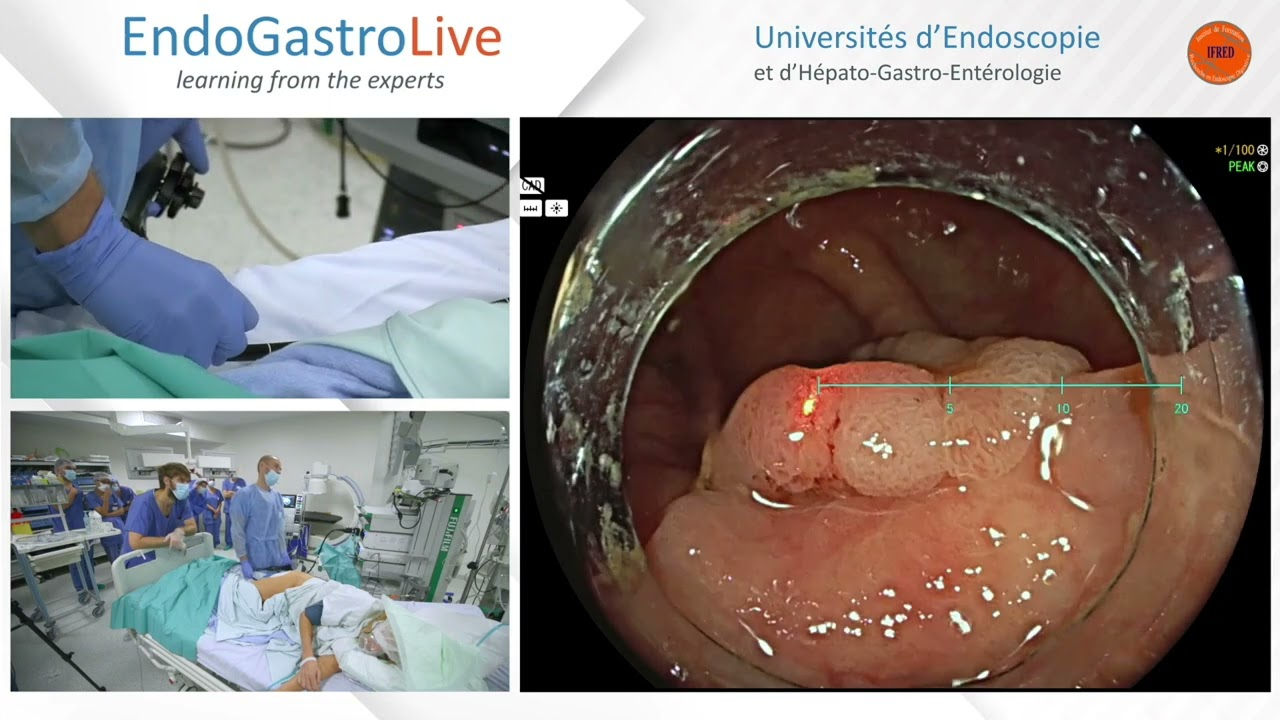
Underwater EMR after chromoendoscopic characterization
Watch the video ›
Underwater EMR of a right-colon lesion
Watch the video ›
Reference
- Colonoscopy Intervals and Colorectal Cancer Incidence after Adenoma Removal
Jover R, Bretthauer M, Cubiella J, Barry SJE, Macios A, Barnett L, Erichsen R, Kaminski MF, Adami HO, Holme Ø, Ijspeert J, et al. The New England Journal of Medicine. 2026 Sep 17;395(11):1051-1061. doi: 10.1056/NEJMoa2603816.
EndoGastroLive – The Scientific Newsletters
Endoscopy is both an art and a science. Beyond mastering techniques and procedures, practice relies on evidence that keeps evolving — and that deserves more than a quick read of an abstract.
The EndoGastroLive Scientific Newsletters offer short, punchy, critical analyses of the publications that matter in endoscopy and gastroenterology: not just the results, but their significance, their limitations, and whether — or not — they should change what we do tomorrow.
The science behind the scope.