

The history of malignant gastric outlet obstruction has long been defined by a compromise between speed and durability.
Duodenal stents offered rapid symptom relief and short hospital stays but were plagued by recurrent obstruction. Surgical gastrojejunostomy provided durable patency but at the cost of greater invasiveness, longer recovery, delayed chemotherapy, and higher healthcare utilization.
In 2025, that trade-off may finally have disappeared.
The first randomized trial comparing EUS-guided gastroenterostomy (EUS-GE) with duodenal stenting, DRA-GOO, demonstrated a dramatic reduction in reinterventions (4% vs 29%), while maintaining comparable safety and clinical success. EUS-GE appeared to combine the rapid recovery associated with endoscopic stenting and the long-term durability traditionally reserved for surgery.
More recently, two independent randomized controlled trials, GOOSE and ENDURO, directly challenged surgical gastrojejunostomy.
In GOOSE, the composite primary endpoint—failure to achieve adequate oral intake, need for reintervention or enteral nutritional support, or procedure-related adverse events—occurred in only 7.9% of patients treated with EUS-GE compared with 38.9% after surgery. Patients resumed a solid diet sooner (2 vs 5 days), were discharged earlier (3 vs 9 days), reported better early quality of life, and generated more than $17,000 in savings per patient.
ENDURO reached remarkably similar conclusions. Patients undergoing EUS-GE resumed solid food after a median of 1 day versus 3 days after surgery and were discharged after 1 day compared with 4 days. Importantly, this accelerated recovery was not achieved at the expense of long-term efficacy, with reintervention rates remaining low and comparable between groups (10% vs 12%). A trend toward earlier initiation of systemic therapy was also observed.
Beyond statistics, EUS-GE delivers precisely what matters most to patients with advanced cancer: faster symptom relief, earlier return home, fewer hospital encounters, and uninterrupted access to oncological treatment.
After demonstrating superiority over duodenal stenting and now outperforming surgery in two randomized trials, the question is no longer whether EUS-GE is an alternative.
In expert centers, it has become the new benchmark against which all other palliative strategies for malignant gastric outlet obstruction should now be measured.
FROM THE ENDOGASTROLIVE MEDIA LIBRARY
EUS-guided gastrojejunostomy: a practical tutorial
(Please note that the following video is currently available in French only)
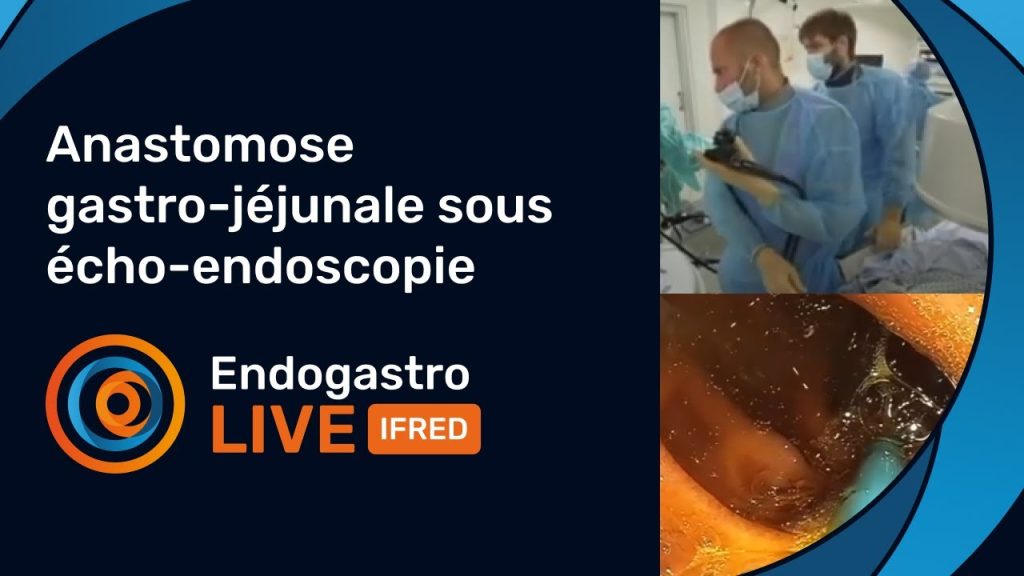
EUS-guided gastrojejunostomy
Watch the video ›
References
- Bang, J. Y. et al. Endoscopic or surgical gastroenterostomy for malignant gastric outlet obstruction: a randomised trial. https://doi.org/10.1136/gutjnl-2025-336339 (2026) doi:10.1136/gutjnl-2025-336339.
- van de Pavert, Y. L. et al. Endoscopic versus surgical gastroenterostomy for palliation of malignant gastric outlet obstruction (ENDURO): a randomised controlled trial. Lancet Gastroenterol Hepatol 10, 1065–1074 (2025).
- Teoh, A. Y. B. et al. Endoscopic ultrasonography-guided gastroenterostomy versus uncovered duodenal metal stenting for unresectable malignant gastric outlet obstruction (DRA-GOO): a multicentre randomised controlled trial. The Lancet Gastroenterology & Hepatology 10, e8–e16 (2025).
EndoGastroLive – The Scientific Newsletters
Endoscopy is both an art and a science. Beyond mastering techniques and procedures, practice relies on evidence that keeps evolving — and that deserves more than a quick read of an abstract.
The EndoGastroLive Scientific Newsletters offer short, punchy, critical analyses of the publications that matter in endoscopy and gastroenterology: not just the results, but their significance, their limitations, and whether — or not — they should change what we do tomorrow.
The science behind the scope.