

For nearly two decades, the management of large superficial rectal neoplasms has been divided between two worlds: advanced endoscopy and transanal surgery. In 2026, that debate may finally be reaching its conclusion.
The French multicenter MUCEM study, including 330 patients, demonstrated that endoscopic submucosal dissection (ESD) was more cost-effective than transanal endoscopic microsurgery (TEM), achieved higher-quality resections (99% en bloc resection), and was associated with significantly better disease-free survival (94.3% vs 84.6%).
These findings were subsequently reinforced by the first randomized trial ever conducted in this field. In DSETAMIS, ESD proved non-inferior to TAMIS for local recurrence while providing shorter hospitalization (1 vs 2 days), lower costs (€6,167 vs €11,289), higher technical success, and similar safety. Notably, no recurrence occurred after ESD.
Yet the advantages of ESD likely extend beyond the endpoints measured in these studies. Unlike transanal surgery, ESD preserves rectal anatomy, avoids full-thickness excision, facilitates real-time optical diagnosis, minimizes functional consequences, and does not compromise subsequent radical surgery if required. It also aligns perfectly with modern organ-preservation strategies and the growing demand for less invasive, more sustainable healthcare.
As Western training programs mature and endoluminal technologies continue to evolve, ESD is no longer the challenger. For large superficial rectal neoplasms, it has become the standard against which all other local excision techniques should now be measured.
FROM THE ENDOGASTROLIVE MEDIA LIBRARY
Modern cases of rectal ESD
(Please note that some of the following videos are currently available in French only)
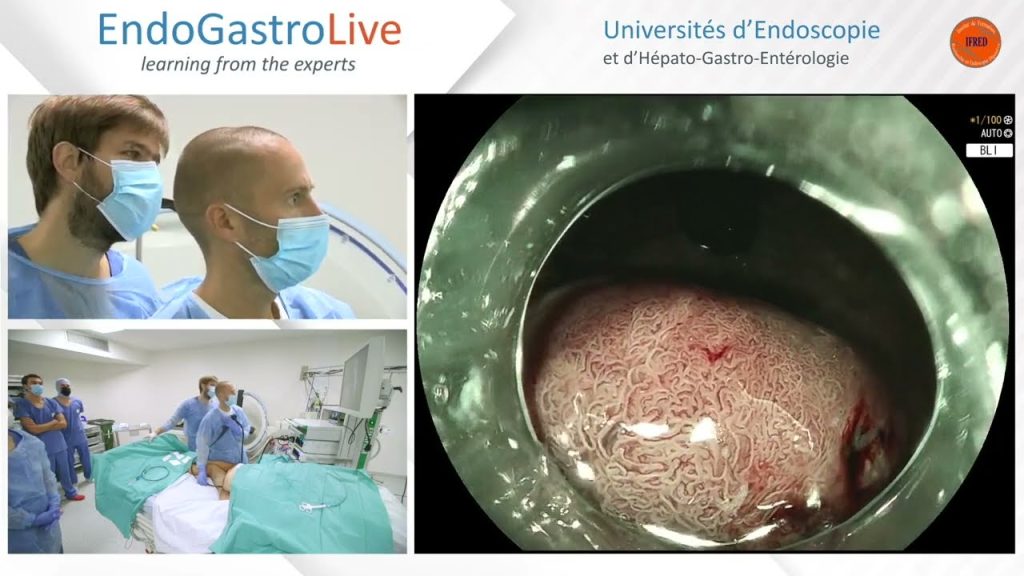
Submucosal dissection: Granular LST with Macronodule
Watch the video ›
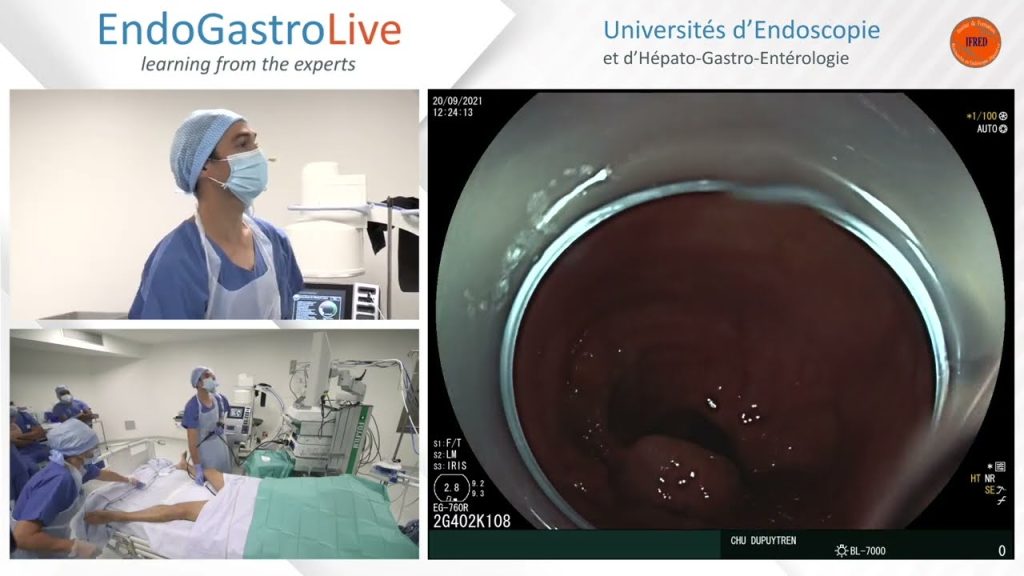
Submucosal dissection: Granular LST of the Rectum
Watch the video ›
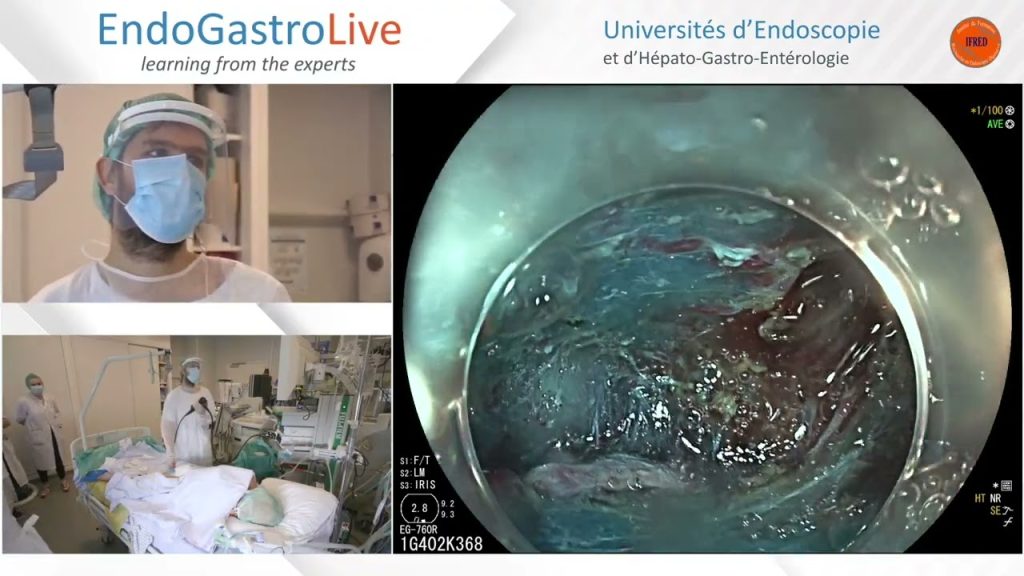
Submucosal dissection: Granular LST of the Rectum
Watch the video ›
References
- A Randomized Trial of Endoscopic Submucosal Dissection vs Transanal Minimally Invasive Surgery in Early Rectal Neoplasms: DSETAMIS-2018 Study.
de Frutos Rosa D, Alonso Sebastián I, Barquero Declara D, Badia Closa J, Nogales Ó, Jiménez Gómez LM, Santiago García J, Valentín Gómez F, Royuela Vicente A, Sánchez Movilla A, Albéniz E, Herreros de Tejada Echanojáuregui A; Mucosal Resection; Third-Space Endoscopy Working Group from the Spanish Society of Gastrointestinal Endoscopy.Gastroenterology. 2026 Jan;170(1):161-173. doi: 10.1053/j.gastro.2025.07.029. Epub 2025 Jul 30.PMID: 40749854 - Transanal Endoscopic Microsurgery or Endoscopic Submucosal Dissection in Early Rectal Tumors: A Clinical and Cost-Effectiveness Analysis: The MUCEM Study.
Beyer-Berjot L, Delettrez C, Jacques J, Rouanet P, Chaussade S, Lefèvre JH, Chabrun E, Koch S, Tuech JJ, Bridoux V, Rullier E, Denost Q, Panis Y, Maggiori L, Benoist S, Brouquet A, Barthet M, Gonzalez JM, Cotte E, Arquillière J, Jafari M, Meurette G, Poincloux L, Zerbib P, Regimbeau JM, Sabbagh C, Prudhomme M, Legros R, Berdah S, Dervaux B, Boucekine M, Denies F, Rivory J, Baumstarck K, Pioche M, Lepilliez V.Gastroenterology. 2026 Jun;170(7):1533-1545. doi: 10.1053/j.gastro.2026.01.006. Epub 2026 Jan 29.PMID: 41620037 - For Early Rectal Neoplasms, the Time Has Come to Move Beyond the Transanal Minimally Invasive Surgery Era: Endoscopic Submucosal Dissection Is No Longer the Challenger-It Is the Standard to Beat.
Jacques J, Steingrimsson J.Gastroenterology. 2026 Jan;170(1):14-16. doi: 10.1053/j.gastro.2025.09.006. Epub 2025 Sep 10.PMID: 40939848 No abstract available.
EndoGastroLive – The Scientific Newsletters
Endoscopy is both an art and a science. Beyond mastering techniques and procedures, practice relies on evidence that keeps evolving — and that deserves more than a quick read of an abstract.
The EndoGastroLive Scientific Newsletters offer short, punchy, critical analyses of the publications that matter in endoscopy and gastroenterology: not just the results, but their significance, their limitations, and whether — or not — they should change what we do tomorrow.
The science behind the scope.