

For decades, surveillance of non-dysplastic Barrett’s esophagus has been considered self-evident. Detecting dysplasia early, preventing cancer progression, and improving survival appeared intuitively beneficial. The problem was simple: the evidence supporting this strategy was almost entirely observational.
The BOSS trial has changed the conversation.
As the first randomized controlled trial ever conducted in Barrett’s esophagus surveillance, BOSS compared scheduled surveillance endoscopy with endoscopy performed only when clinically indicated. After a median follow-up of nearly 13 years, surveillance increased the detection of dysplasia, particularly high-grade dysplasia, but failed to demonstrate any reduction in esophageal adenocarcinoma incidence, cancer-related mortality, or overall mortality. More endoscopies, more dysplasia detected, but no clear patient benefit.
The recently published economic analysis strengthens this message. Surveillance generated only a marginal gain in quality-adjusted life years (+0.018 QALYs) at a substantially higher cost, resulting in an incremental cost-effectiveness ratio exceeding $115,000 per QALY gained. Even under optimistic modeling assumptions extending follow-up beyond 20 years, surveillance remained unlikely to be cost-effective. As highlighted in the accompanying editorial by Jacques Bergman and colleagues, the major contribution of BOSS is not to prove that surveillance is ineffective. Rather, it fundamentally changes the evidentiary framework. Surveillance is no longer a practice that can rely solely on biological plausibility and observational associations. Future recommendations must now justify who should be surveilled, at what interval, and for what expected benefit.
Of course, important limitations temper any definitive conclusions. The trial suffered from substantial contamination, with many patients in the “at-need” group ultimately undergoing endoscopy. Cancer events were rare, limiting statistical power. Endoscopic imaging technologies, optical diagnosis, acetic acid chromoendoscopy, and endoscopic eradication therapies have evolved considerably during the study period. These factors all bias the results toward uncertainty rather than certainty.
Yet one critical lesson may have received insufficient attention.
The most important endoscopy in a Barrett’s patient is probably the first one.
Risk stratification can only be as good as the baseline examination. A high-quality index endoscopy performed according to guideline recommendations—with dedicated inspection time (at least one minute per centimeter of Barrett’s segment), careful virtual or dye-based chromoendoscopy, and appropriate use of targeted biopsies and/or the Seattle protocol—remains the cornerstone of management.
Numerous studies have shown that a substantial proportion of prevalent neoplasia is detected during this initial examination rather than during subsequent surveillance rounds.
The future may therefore not lie in surveilling everyone. Instead, it may lie in identifying from the outset those patients truly at risk. Barrett’s length, baseline dysplasia, smoking, obesity, and other established risk factors should probably be integrated into increasingly individualized surveillance strategies.
BOSS does not close the chapter on Barrett’s surveillance.
It opens a new one.
The question is no longer whether surveillance should exist. The question is which patients still need it.
FROM THE ENDOGASTROLIVE MEDIA LIBRARY
Dysplasia Detection Videos in Barrett’s Esophagus
(Please note that some of the following videos are currently available in French only)
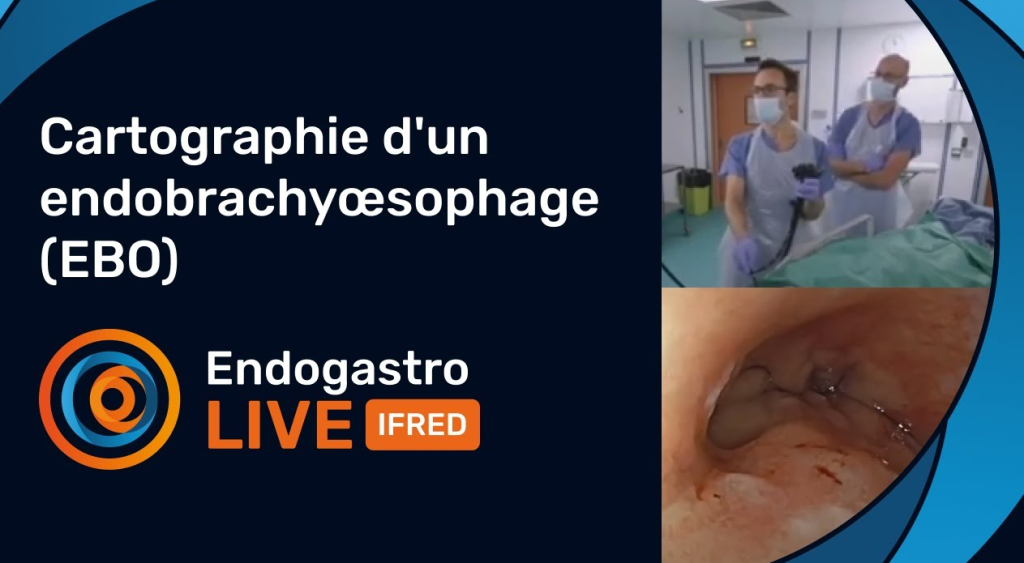
Mapping of Barrett’s Esophagus
Watch the video ›

Characterization of Dysplastic Barrett’s Esophagus
Watch the video ›
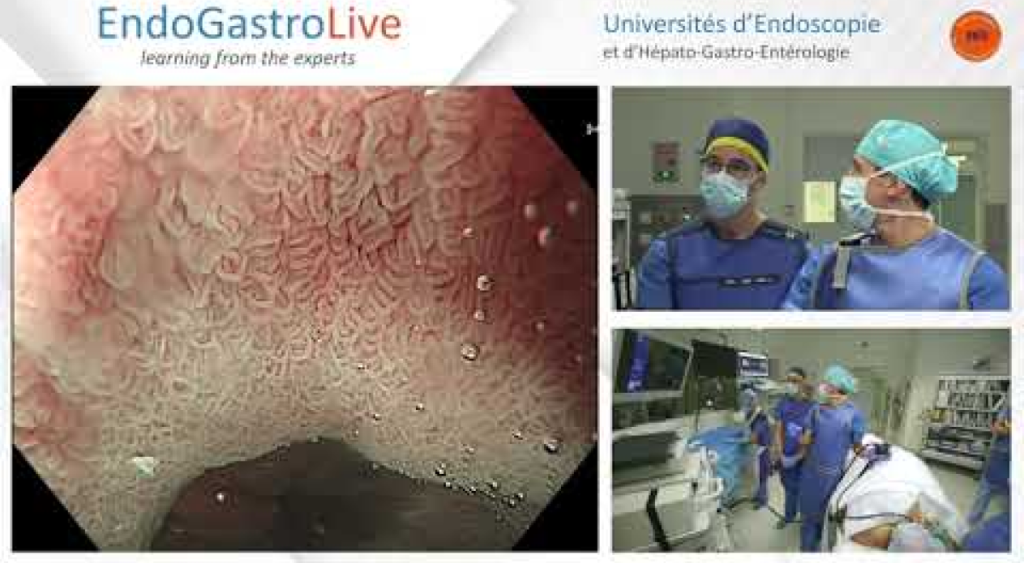
Characterization of Barrett’s Esophagus
Watch the video ›
References
- Barrett’s Oesophagus Surveillance Versus Endoscopy at Need Study (BOSS): A Randomized Controlled Trial.
Old O, Jankowski J, Attwood S, Stokes C, Kendall C, Rasdell C, Zimmermann A, Massa MS, Love S, Sanders S, Deidda M, Briggs A, Hapeshi J, Foy C, Moayyedi P, Barr H; BOSS Trial Team. Gastroenterology. 2025 Nov;169(6):1233-1243.e8. doi: 10.1053/j.gastro.2025.03.021. Epub 2025 Apr 1.PMID: 40180292 - Cost-Effectiveness of Regular Surveillance Versus Endoscopy at Need for Patients With Barrett’s Esophagus: Economic Evaluation Alongside the Barrett’s Oesophagus Surveillance Study (BOSS) Randomized Controlled Trial.
Deidda M, Old O, Jankowski J, Attwood S, Stokes C, Kendall C, Rasdell C, Zimmermann A, Massa S, Love S, Sanders S, Hapeshi J, Foy C, Briggs A, Barr H, Moayyedi P; BOSS Trial team.Gastroenterology. 2025 Nov;169(6):1244-1252.e7. doi: 10.1053/j.gastro.2025.04.026. Epub 2025 May 16.PMID: 40383306 - Endoscopic Surveillance for Nondysplastic Barrett’s Esophagus: Are We Violating “Primum Non Nocere”?
Van Munster SN, Bergman JJGHM, Inadomi JM.Gastroenterology. 2025 Nov;169(6):1116-1118. doi: 10.1053/j.gastro.2025.06.019. Epub 2025 Jun 30.PMID: 40602546
EndoGastroLive – The Scientific Newsletters
Endoscopy is both an art and a science. Beyond mastering techniques and procedures, practice relies on evidence that keeps evolving — and that deserves more than a quick read of an abstract.
The EndoGastroLive Scientific Newsletters offer short, punchy, critical analyses of the publications that matter in endoscopy and gastroenterology: not just the results, but their significance, their limitations, and whether — or not — they should change what we do tomorrow.
The science behind the scope.